As I sit here the evening before I watch my first film at the 2012 Toronto International Film Festival (TIFF), my head spins with the impeccable line-up of movies programmed at the festival. As Roger Ebert likes to say, TIFF has become the unofficial launch pad for the awards season, where films of any serious reckoning start building buzz with the hope of getting to a deafening clamor by the end of the year. Pedigreed filmmakers and renowned casts from what seems like hundreds of films are all vying for our attention. Many prestige movies will get celebrated. But many others will disappoint. Some will come out of nowhere and stake a claim in popular consciousness. And others will fade away with the ignominy of having hewed too close to mediocre.
Even before I started considering the festival line-up, here were the 2012 unreleased films that were most highly anticipated by me. They are all on my "Please God, Don't Have This Film Suck" list.
1. Cloud Atlas
A film directed by Tom Tykwer (Run Lola Run) and the Wachowski siblings (the Matrix trilogy). With that cast (Tom Hanks, Halle Berry, Hugo Weaving, Susan Sarandon, Jim Broadbent, Hugh Grant). Consider me sold.
I avoid watching trailers of movies as much as I can. But with Tykwer and the Walkowski siblings at the helm, I could not resist. And the funniest thing happened; the first two minutes of the trailer so lit up that part of my brain that responds to movies, that I had to click the trailer shut half-way, because I did not want to ruin my pleasure of watching the actual movie. The film scans across several centuries, and loops across time and space and seems the kind of go big or go home concept film that will either amaze or embarass. I do not even care if this film is an awful mess. I just want to show my support for ambitious, sprawling, probing, visionary films. So that the success of such films can encourage the big studios from making one less stupid horror movie aimed at teenagers.
2. Django Unchained
Tarantino in a script he has said has been his most challenging yet. Dicaprio as the bad guy. Nuff said.
3. Hello, I Must Be Going
There is something about this film that, again, ever since I first heard about it, tapped the right spots in my brain. Yes, it is a small unknown indie film with mostly unknown actors. But much of it screams that it is the kind of movie I will love. I hope I am not wrong.
4. Argo
I was one of few people to think that The Town, the previous film directed by Ben Affleck, was one of the best movies of 2011. Behind the camera, this guy's the real thing (sometimes in front of the camera too, but all too inconsistently). I am intrigued by the story, loosely based on real events, around the unbelievable-if-it-were-not-true effort to rescue American hostages from Iran in the late sixties.
5. Looper
I'm a sucker for time-travel and sci-fi films. This one looks like a doozy. And stars the cant-go-wrong right now Joseph Gordon Leavitt. And Bruce Willis. Don't betray my hopes, Rian Johnson (director of Brick and The Brothers Bloom).
I often hear the complaint that few good
films get released in the first half of the year, and that studios deliberately
withhold the better movies until Oscar season later in the year. But I have always found that be an over-generalization. There’s always fine films released
earlier in the year, many that eventually get awards consideration. Below are
five movies from January – June 2012 that were at the top of the class for me.
1. Prometheus
This is a film with ambition to burn. There’s more wonder
and imagination in the first ten pre-credits minutes of this film than most
entire movies. Yes, the film bites off more than it can chew, daring to ask
some big questions (nothing less than where, as humans, did we come from?) even
when it fails to answer some of them convincingly. I say, better to be messy
and probing than to be obvious and rote. If there is justice in the world, Michael Fassbender, and perhaps even Charlize Theron will get some awards season recognition for their work here. Offering some of the best examples in
film of masterly pacing, particularly in a must-discussed scene of gestational termination that is the stuff of nightmares, this is a magnificent, visionary,
flawed, and visually grand film.
2. Your Sister's
Sister
I want to hug this film until it suffocates, I like it so
much. It builds a loose story around three characters - a man, his friend, and
her sister - and then lets the marvelous actors who play them run with it. And
Emily Blunt, Rosemary DeWitt and Mark Duplass are note-perfect here, never an
abstraction but also never less than fully dimensional, playing contradictory, flawed,
and deeply human individuals. This is also the rare film that gets sibling
relationships perfectly. You love your siblings, respect and admire them. But
with the possible exception of your parents, you also have the longest history
with them compared to anyone else on the planet, and hence they can also affect you the most, get you where it hurts
the most. I want to grab strangers on the street and beg them to go see this
film.
3. The Grey
On the surface this is a survivalist film, of a group of men
stranded in the arctic cold after their plane crash-lands into a wilderness
populated by predatory wolves. To make it through, they need to learn not only
to combat their lethal surroundings but also each other’s behaviors so they can
work together. We have seen this man versus nature story before, but what
elevates this film is how it finds the means to fold in some remarkably
effective philosophical musings. Are we destined to simply play out a fate
written for us, or can we willfully change the future? Lost without any chance
of external help and suddenly on the food chain of larger beasts, some men find
the fight for survival futile, comical even and others are willing to fight to
the last breath. Best of all, the movie finds in its last act, something
approximating grace, a poetry of despair. Not bad for what might seem like a
standard-issue Liam Neeson action movie.
4. Jeff Who Lives At
Home
This movie is a quiet valentine to those who stand and
wait. The film begins with Jeff as a
character that is aimless, unemployed, and adrift and spends the rest of its
time in finding a bit of the heroic in him. Jeff as played by Jason Segal
is neither pitiable nor transparently noble. He is just a schleppy guy who has
an absolute belief in certain karmic patterns within the universe. This sort of material
can fall flat a hundred ways. But the movie holds together remarkably well, in
spite of an deus ex machina twist toward the end. The film has the good sense
to recruit Susan Sarandon as Jeff’s mother, who demonstrates, in a sub-plot
that would have defeated a lesser actor, why she’s one of cinema’s greats.
Nothing about this film should have worked, but it all marvelously does.
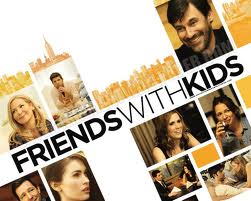
5. Friends With Kids
There’s a scene in Friends
With Kids where Jon Hamm, seated at a dinner table with a group of longtime
pals, and having had a little too much to drink, says the one thing that a
person should never say to a best friend. And it stings like a slap in the
face.The film has many such
recognizably real observations. Many wrote this movie off as a chick flick with
slightly upgraded wit, but I found it to be uncommonly perceptive in relaying
the tensions that are always lurking in the underbelly of even the most tightly
knit group of friends. When writing about the
startlingly good turn from Michelle Moynahan in the film Trucker, Roger Ebert mentioned that there are likely so many great actors
who go unnoticed in movies because filmmakers never give them a chance to
reveal their deep talents. Well, Jennifer Westfeldt, the director, writer, and
star of Friends With Kids, deserves
credit for selflessly trusting Adam Scott to demonstrate that he has the chops to shoulder a complicated lead role.
Others movies from the first half of 2012 deserving worthy mention: The Best Exotic Marigold Hotel, Bully, Crazy Stupid Love, The Five
Year Engagement, and Salmon Fishing In The Yemen.
In the next post I will be discussing movies I am most looking forward to during the rest of 2012.
At Thanksgiving every year I update a list of one hundred things in life that I am grateful for. The list evolves. I have something to include in my 2012 update: film festival press accreditation. The three Moviewallas obtained press accreditation for the Los Angeles Film Festival this year. The ability to watch any movie playing at a film festival at zero cost and no standing in lines is something to be grateful for in life. Very grateful.
So there we were over two weekends trying to watch as many films as humanly possible. The struggle to pick from every manner of cinematic presentation - foreign films, documentaries, short film programs, Hollywood premieres, Question and Answer sessions with actors/directors/cinematographers, cult films, old classics.... is the cinephile's wet dream. And we sampled to our heart's content. As the days wore on, and as I made my way through yet another screening, feeling the best kind of exhaustion there is [that comes from having watched too many(!) films], a theme began to emerge. Across the films I had sampled during the festival the common theme was of exceptional, honest performances from child actors. One film after another amazed me with startling, unaffected performances borne of a naturalism that is all too often missing from the portrayal of children in cinema.
The adage goes that filmmakers would do well as long as they steer clear of child actors and animals. And yet, the makers of so many films I saw bravely embraced the uncertainty - and what is likely a high level of difficulty with working with children - and brought something of meaning to the screen.
The Swiss-Italian production Summer Games
The first movie I saw, Summer Games (Jeux D'ete, directed by Giorgio Gobi, the official Swiss submission to the Foreign Language Film Category at this year's Academy Awards), is one thing on the surface and many things underneath. At a run-down coastal town in Italy frequented by less than affluent tourists, many arrive during summer to camp out for a few days around the beach. Which causes for unexpected interactions amongst strangers. Tenuous at first, an unlikely clique develops between five pre-teen and teen kids from very different economic, social and ethnic backgrounds. The initially innocent games the kids devise - in which the loser has to submit to what the victor demands - start to, over a period of time, wander into increasingly dangerous territory. The connections between the five unravel and reform constantly, influenced as much by the behavior of their adult guardians as their own shifting loyalties. The movie is as much about the adults, but one of the joys of this film is to see how effortlessly it captures the ebbing shifts in power and affinities between the kids in this group. Yes, we know that kids of a certain age can be remarkably cruel. And fearless in walking headlong into danger, because what child of a particular age cares about mortality. The near impossible feat this film accomplishes is in depicting one of the more dangerous and slippery things in cinema: teenage sexuality. The movie breathes and aches with a sensuality that is never prurient and as natural as the water in which the five kids spend so much of their time. Grappling with feelings they do not know how to process, and raging with contradictory, self-destructive behavior, the kids do what kids do. And the movie only holds a mirror to them, without judgment. The film is of course immensely helped by the natural performances from the lead child actors who wondrously bring all the complexities of being not-quite-an-adult to life. This is a film to seek out.
Thursday Till Sunday (De Jueves A Domingo, by first time director Domingo Sotomayor Castillo) is a Chilean film that covers a road trip taken by a couple, their daughter, and young son over four days. The movie is seen, for the most part, through the eyes of the teenaged daughter. Approaching neorealism, this is a work of stark austerity, which may tempt a viewer to assign it hastily to the genre of films where nothing happens. The studiedly documentary feel, the naked abandon of traditional plotting and story arc, and the patient, unrushed, lingering of the camera over these four characters, may at first seem unsettling. But when one stops trying to deduce the film on a minute by minute basis, one settles into its rhythms. And you realize this is a film that trusts the intelligence of the viewer enough to not provide easy answers. And demands that the viewers bring their own experiences to glean what they will from this story. Slowly the cracks in the relationships come into focus, sometimes ever so briefly. More than anything else the movie evokes a sense of nostalgia - about a time, when being a child meant not having the tools to decipher what the behavior of the adults signified. The young daughter is never precocious, or all knowing, and the actor who plays her (Santi Ahumada) brings an effortless naturalism that belies any knowledge of a camera being around her, and captures all the complexities of being a teenager: distracted, self-involved, impatient but always well-meaning. In the Q and A after the film, the director revealed that the four-year old who played the younger brother was obviously not up to acting in the traditional sense, and the other actors learned to ad-lib and work around his natural behavior on camera. No wonder the film evokes a feeling of purity about it.
Not all films with children had the same effect. Crazy and Thief, a film of less than an hour, made by Cory McAbee, stars the director's seven year-old daughter and two-year old (!) son, as the titular characters who have adventures as they wander through the streets of a city. Their experiences straddle the line between reality and fantasy, the obvious and the mythological. This movie elicited the strongest reaction I had of any film I watched at the festival. And it was not the good kind. Precious to an extreme (much of the two year-old's warbling is indecipherable and sub-titles tell us what he is saying), and constantly trying to be more than it is, the film for me, was ultimately undone by some unforgivable choices. I have a problem with films that depict children in peril with the specific intent of eliciting a quick emotional rise from the audience. And this film has many scenes of the two unaccompanied minors being put into all manner of danger. Yes, I realize that much of the film is meant to be surreal, but when the two kids get into the car of a perfect stranger, and then into his home, the ugly possibility of pedophilia hanging over the premise was too disturbing for me to shake off. I question the ethics of making a film such as this.
Armando Bo, the first-time director of the The Last Elvis (El Ultimo Elvis) has no trouble coaxing an altogether believable performance out of Margarita Lopez, who plays in this film, the young daughter of an Elvis Presley impersonator in Argentina. But it is John McInerny, playing Carlos, the lead, who impresses most by managing to transcend the kitschiness associated with celebrity impersonators. He plays a blue collar worker struggling to make ends meet while dealing with an ex-wife who does not think much of him, and a daughter who is uncommunicative. On the side, he plays Elvis tunes at local gigs, and the film makes it clear from the very first scene that this is not a man lacking in talent. His single-minded admiration for Elvis is so complete as to be entirely immune to irony. Or pity. Or perverseness. This man simply believes in Elvis. And it is to the director and lead actor's credit that this character never becomes laughable. Carlos is 42 years old, the same age as when Elvis died, and things spiral even further out of control as a set of events leave him having to become the primary caretaker of his distant daughter. As he labors to stay afloat, the movie quietly shifts into an uncompromising character study of a man under duress. And the final scenes of the film, invested with a sense of inevitability, cunningly hint at a mystery left for the viewer to solve. The kind that should trigger a reconsideration of all that has transpired earlier in the film. The day before the screening of the movie, we were fortunate to run into the completely disarming young director of the film, Armando Bo (who previously co-wrote the film Biutiful). Please come see my film tomorrow and tell me afterward whether you liked it, he said. I have been doing one better than that, Mr Bo. I have been telling anyone who will listen to find a way to see this uncommonly accomplished film. And I can hardly wait for what Armando Bo does next.
In the short films program that I saw, it was the 11-minute feature Fireworks that finally gave me that transcendent experience one gets only so rarely when watching films. Directed by the twenty-something Victor Hugo Duran, this is the story of two young boys in South Los Angeles who go about trying to get their hands on fireworks on July 4th one year, in order to impress two girls. That's it. Beautiful, simple and sublime, this film shows that it does not take much to reflect truth on film. In the Q and A session afterward, the director revealed that during filming he abandoned the original character names and let the child actors use their own names and voice the dialog in their own words. And the film was shot in a day! This short is a tremendous achievement. In another short feature Big Man, a boy in Nigeria can't help being a kid and playing pranks on his younger brother, until one day things go too far. Everything relies on the camera capturing the contradictions of being a child, wild and unbridled, but also good and regretful. And the film is up to the task.
Another short film, Paraiso, is an observation of men who wash the windows of Chicago skyscrapers from the outside, suspended from rooftop wires. It provides voice to the deeply philosophical musings from these men who are all too aware of the personal peril they face during almost every minute of their job. As with the best documentaries, this short demonstrates that there is much to learn about life, if we only know put the camera on the right subjects. The short Laura Keller, NB (non-breeder), reiterates that all good science fiction is about ideas and concepts (and not aliens and spaceships). With minimal resources, this 16-minute feature creates an entirely credible vision of a future world that is disturbing in its political implications.
Besides all of the films that underlined the theme of amazing child performances, there were other movies at the 2012 LA Film Festival that made an impression. The fest had a rich roster of documentary films. All of the ones I saw were memorable, in turns entertaining, angering, insightful, and educational. This included Reportero, La Camioneta: The Journey Of One American School Bus, Bestiaire, and The Queen Of Versailles (the latter is playing in a cinema near you right now, and is worth the trip there; we discussed it in a recent Moviewallas podcast). And I didn't even get to see well regarded docs such as The Iran Job, Searching for Sugarman, Call Me Kuchu and Words of Witness. Lest one might wonder if the festival only featured serious fare, many mainstream Hollywood films were also screened, including Magic Mike, To Rome With Love, People Like Us, and Celeste and Jesse Forever, all of which have since had theatrical distribution (and discussed in Moviewallas podcasts). But the one standout in the festival program of relatively mainstream films was Its A Disaster (directed by Todd Berger and starring Julia Stiles, David Cross and America Ferrera). Likely at the top of the class in the recently minted genre of the End Of The World films, this movie has the distinction of being bitingly funny; it would be criminal if this film did not find distribution and show up for wider consumption soon.
We always say "Too many films, too little time" on our podcasts. Nowhere is this more obvious than when attending a film festival. Next stop, the 2012 Toronto International Film Festival where further delights await.
We may not admit it but we all have affection for certain films that everyone else has hated. Or just ignored. We may be loathe to acknowledge it, often for good reason, i.e., the film is godawful, but we carry a covert fondness for these films all the same. Here is my first entry in the series "So Sue Me, I Liked This Film" where I will discuss such movies. And try to, the best I can, rationalize why a generally reviled movie resonated with me. In many instances, I may not have necessarily loved such a film, just not hated it as much as the general public.
First in this entry is Management which stars Steve Zahn, Jennifer Aniston, Fred Ward, and Woody Harrelson. The film came (and went) in 2008 while registering nary a blip on anyone's radar. Including my own. Upon release, it was rounded off by most critics as being a particularly uneven and rambling entry in the forgettable line of Jennifer Aniston rom-coms. [It carries a 46% rating on rottentomatoes.com and 50% on metacritic.com].
The film tells the story of a man-child (Zahn) who works in a rundown motel in small-town Arizona that is owned and operated by his parents. One day a city executive in the form of Jennifer Aniston shows up at the motel for a two night stay. And as cluelessly as those miniature dogs that lunge out at canines five times their size, Zahn's character reaches out to Aniston's character for...what? romance? friendship? a quick roll in the sack? Whatever that is, it is obvious he is clearly out of his league. But even then he persists. To extreme lengths and through many changes in his life. That's about the story of this film.
Trying to defend why you liked a film can sometimes be voodoo. You feel what you feel, in spite of all the intellectual and objective rationalizations in the world. But nevertheless, here is my attempt.
To be fair, Management is not all out horrid, quite the contrary it is a mixed bag of things that work beautifully and those that fail just as gloriously. Ironically, I like Management more because it never fully realizes its potential. I admire it for the promise it holds, like one does a nephew who one knows can do so much better. The film has a darkness, a palpable despair about it, but then at other times it goes inexplicably for broad slapstick. It has dialog that gets bone close to the truth, the kind that seldom hits the raw nerve in mainstream films. But then those brutally honest words get diluted by other dialog that is surprisingly off-tone.
I liked what Steve Zahn brings to this film. In his prior work, I have seen Zahn mostly fulfill comic relief duty in bit parts and I was unprepared for him to carry a film. He does. He brings an immediate adorability to this character; a man so purposefully good-hearted as to be immune to the cynicism and deviousness in his world. He is abjectly, and some might say blissfully, unaware of how he is perceived by others. One could justifiably call this character stupid, or child-like. But Zahn makes him, at all times, fully believable. This is the kind of character that Paul Rudd has been trying to portray in many movies, most recently in Our Idiot Brother. But Zahn nails it here. Perhaps because he shares some of these traits in real life, I don't know. Also yes, I realize this is a Jennifer Aniston romantic comedy. And while there may not be universal agreement on many things in the film community, there is unanimous consensus that Jennifer Aniston romantic comedies equal crap. Well, here's your outlier. As in The Good Girl, Aniston brings a lived-in, real-world, somewhat exhausted sensibility to this role, something that has been missing from her other work. There is nothing cutesy, or glistening about her in Management. Aniston's best work may well be ahead of her when she simply stops being Aniston - as she demonstrated most recently in Horrible Bosses.
I liked that the architecture of this film is unpredictable. Truth be told, it is all over the place, a mess even. Oh how recklessly the plot veers, particularly in the second half of the film. Any five studio-executives in a conference room would not have been able to resist the urge to tamper with this film. But this movie is likely the result of a writer-director left to his own means. A person who wants to tell a story in his own voice will take these risks. I say, better to fail than not risk at all. I admire first time director (and writer) Stephen Belber for letting Management take the form that it does; if wildly careening, then so be it. And I look forward to his next film.
I liked how understated Steve Zahn's parents are in this film. Played by Fred Ward and Margo Martindale, they do not have substantial dialog. But the film finds that they have a lot to say. And they ultimately form the emotional backbone of the film.
I liked that this is the earliest film to provide proof that henceforth, any movie will be instantly improved by the presence of Woody Harrelson. Barely a year after No Country For Old Men, but long before The Messenger, long before Zombieland, long before Rampart, and long before Game Change, there was Management. Harrelson has a small part in the film (in a role cartoonishly tailor-scripted for him) but he walks away with the movie.
But mostly here is what I liked about Management: that for a smalltime generic romantic comedy, the movie reaches for some rather big issues. About finding one's place in life. About deciding how much of your parents you want to be in your own life. About eventually embracing what the world expects of you. And while appreciating the comfort that comes from that, also realizing the price one pays for willfully forgetting one's dreams, as outlandish and untenable as they might be. I liked that we seldom see characters in films that are so obviously, unquestionably, hopelessly in love with someone. Un-condition-ally. Like a dog. Like a stalker. Through no control of their own. This is creepy territory for a film to be in, something that can alienate mainstream audiences. But any movie that is trying to speak to the struggle between everyday practicality and moony romanticism is doing something right. Its hardly a consistent success though. To be sure, Management fails with many of the big issues it wants to comment on - sometimes because it lacks the subtlety to pull it off, and sometimes the skill. But I liked that the film at least asked these questions.
If this film were even a modest hit perhaps I would not like it as much as I do. But as unrecognized and uncelebrated as it is, I have affection for it. Like one does for that nephew, warts and all.
I like everything about going to the cinemas. All the little
rituals.
I like to listen to those waiting in the ticket line debate
about what film they should be watching. I like grabbing my little tub of
"Dibs" at the concession stand. I like slipping the ticket stub into
my back pocket after the other half's been torn out. I like scoping out the best
seats in the movie hall the minute I enter it. I like it when (sometimes) a theatre employee comes to the front of the hall and makes an announcement that
always ends with: "Enjoy the Movie". I like, make that love, previews - sometimes even more than the actual film I am about to see (although I have my beef with movie
trailers these days, but that is for another post). I like when the movie begins and the Universal,
or Columbia, or Twentieth Century Fox intro rolls across the screen with its familiar music; this makes me more than a little giddy. And I like movie credits.
For me, any filmmaker who truly loves movies has to invest
in how their film declares its title. How can any filmmaker
who breathes and lives movies not indulge in one of the few vestiges that
remains in the structure of film today: the opening credits.
One of the easiest ways for me to judge a film, often the
quickest too, is to see how the opening credits have been done.
That is why I frown upon films that altogether do away with
opening credits. I can understand the refusal to indulge in a full run through
every person who contributed to the film; that can wait until the end credits.
But there is endless ingenuity to be exercised in the appearance of the name of the film on the screen: the when, the where and the how.
Of course the history of movies is also associated with the
history of opening credits. Consider the opening credits of the James Bond
movies (as Bond turns to the camera and shoots from his gun at the audience)
the style for which has carried the blueprint for the evolution of the Bond series
itself. Or the famous animated opening credits for the Pink Panther
films. Or that indelible rolling script from the opening of the Star Wars
films. Who can forget the glorious opening credits for 2001, A Space Odyssey,
forever associated with Strauss' Thus
Spake Zarathushtra. But I am going to set aside the obvious, iconic opening
credits. And consider them within the context of more recent films,
including some favorites.
Shame did opening credits beautifully, with a single
shot of Michael Fassbender lying in bed under blue sheets. I have forgotten
many individual scenes from Sophia Coppola's Lost In Translation, but
not the opening credits that scrolled across a sleeping Scarlett Johannson's
barely covered derriere.
It is not just the actual visual of the title credits, or
the movement, or the aesthetic that matters. It is also the timing of when the
filmmaker chooses to announce the name of the film during its narrative. Some
movies start with opening credits off the bat, and I respect that. Others have
fun with it. My personal favorite in this regard is 127 Hours, which provides the best
example of when to place the opening credits for a film. The movie finds the perfect moment during the evolution of its story to announce the title; it occurs literally when the first second of the 127 hours in
question ticks in. In doing so it immediately establishes the wit that Danny Boyle has invested in the movie.
See how it is done for one of the best films of 2011. The
movie starts with a single unbroken shot of a man and woman on either
side of the screen, speaking to an unseen court official as the wife explains
why she is seeking divorce from the husband. The court official dismisses them, noting that the
reason for the proposed separation is trivial. The two walk away from either
side of the screen, and the title flashes: A Separation. This
immediately made me smile and settle down in my seat knowing that I was in the
hands of a filmmaker who knew what he was doing.
How disappointing that someone as gifted, technically
at least, as Christopher Nolan, makes the choice, repeatedly, to do away
entirely with opening credits. He probably considers opening credits too
obvious a cinematic conceit, and I can understand that. But by doing so, he is
also sending the message that his films are somehow above it all. So no opening
title credits for Batman Returns, none for Inception either. And
I am willing to bet there won't be any in the upcoming The Dark Knight Rises
installment. For me, this suggests a filmmaker exercising some manner of
arrogance.
Same thing with Woody Allen, who famously has used the same
white Windsor font against a black background for the opening credits of each
of his films since 1980. When it comes to credits, you can see his refusal to
bend to fashion or showiness or contemporary trends as refreshing,
revolutionary even. He is making the argument, you could say, that the meat of the
film, all the creativity, is in the content of the movie itself. But nah, I find
it lazy. I can imagine Allen telling himself; phew, that's one less thing I
have to worry about. As much as I appreciate Allen as a filmmaker,
that is one down for him in my books.
The worst offenders are some contemporary Indian films,
which use the opening credits as an exercise in marketing. Endless names are
flashed, sometimes one at a time, of financial institutions, of personal gurus,
of family members of the filmmakers, of music executives, of television/radio
channels that advertised the film, and on and on...until you want to scream
for the movie to just begin already. Or even worse when a starlet, unrelated
with the rest of the film, is summoned to shimmy over a musical number as the opening
credits roll by. This is beyond creative bankruptcy; it is mortgaging away upfront
whatever little artistic credibility the filmmaker might have had.
Compare that to someone like Jason Reitman, who in each of
the four major films he has directed, has earned his stripes when it comes to
opening credits. Each movie has used the credits as a way of establishing the
tone of the film with intelligence. For the opening credits in Thank For
Smoking, Reitman finds an almost impossibly perfect song, which, married to the movement of the credits, renders the bone dry sensibility
of the film.
Or consider the overly sweet, quirky sensibility of the Juno
opening credits that play as Ellen Page walks through an animated montage. You
know right there what you have signed up for with the rest of the film.
Or behold the
annoyingly brilliant opening credits sequence for Up In The Air, which if
released in and of itself, would alone have been worth the price of admission.
And
then finally there is Young Adult where Reitman projects the opening credits as
the camera pans over the moving mechanics of a lo-tech cassette tape spooling
in a player. Is this representative of the lead character moving back to an
earlier, less sophisticated phase in her life? Or is it her regressive behavior through the movie that is denoted by the (in)significance of a cassette in a digital world.
Most people have an opinion about the director Lars Von Trier,
that equal parts auteur and provocateur. But to see the first ten minutes of Melancholia,
wordless and filled with jaw-droppingly, heart-breakingly beautiful images
scored against Wagner's Tristan und
Isolde, is to know a filmmaker who has rendered a preamble whose brilliance is nearly immune to criticism. It’s a piece of bravura filmmaking that reiterates
that as much as he tempts us to, we cannot dismiss the talent of Von
Trier.
I am not a fan of David Fincher's remake of Girl With The
Dragon Tattoo, but have to concede to the the beauty of its opening credits. Going as far back as Se(7)en, Fincher has been particularly
adroit with the use of ingenious design for the opening credits of his films.
And how about the title credits for the film Certified
Copy. At the very start of the film, the credits appear over a static
single unbroken shot of an empty podium at a crowded hall. One hears the background
chatter of those gathered to listen to the speaker as the credits roll. This
excitement in the air, is independent of how the speaker will actually fare
with the audience. It is after the film is over that one realizes how complimentary
the opening credits have been to the central theme of the film; it does not really
matter if what you are seeing is the original or a copy. Should not the only
thing that matters be one’s enjoyment of what one is seeing, regardless of
whether it is the original piece or a facsimile thereof?
Speaking of static opening shots in French films, see also
how the single take in the film Cache (incidentally also starring
the invaluable Juliette Binoche), kick-starts the primary conceit of the movie.
You watch what appears to be a photograph of a house as the opening credits begin
to roll. And you are several minutes into the credits, before you see
somebody on a bicycle zip by. And you realize with a start, by jove, this is
not a static picture, but this house is being filmed. As the film progresses,
it is revealed that the family
living in this house is being sent mysterious tapes showing their house being
filmed over extended periods of time. First from the outside. And then,
from inside
the house. Altogether unsettling, isn’t it? Here the filmmaker, Michael Haneke
has, with clever cunning, folded the central crux of the film into the opening
credits.
I complained about Woody Allen and his identical opening
credits for the films he has made over the last thirty years, but see what he
has done in Midnight In Paris. The first five minutes of the movie
are unhurried shots of Paris tableaus, the obvious touristy locales as well as parts
of the city that are seldom seen. One waits for the story to begin, for one of
his neurotic characters to start speaking. But instead one gentle Parisian view
after another unfolds unhurriedly on the screen. You even start to fear if
perhaps the movie is a joke, and the entire film has been cobbled together only
with wordless, plotless images of Paris. But then you find yourself somehow settling
into the space that has been created. It is a brave choice, but it works. When
the lead characters do eventually appear and start talking we are happy to see
them, but we are also smiling at the immersion we have just been
through. Here is Allen gently granting the audience familiarity with the
city in which his story is set.
Really, what better way to very quickly assess the quality of a film you have just sat down to watch than through its opening credits. Works for me every time.There are so many examples of brilliant opening credits. I'd say my personal recent favorite would have to be Melancholia but am curious to hear of others that have struck a chord with readers.
One of the first things Moushumi Chatterjee declares when I see her is that she is exasperated with kids these days spending all of their time on the computer.
And it is surreal.
Growing up as a child, I wouldn't have believed it if told that I would one day sit across from Moushumi Chatterjee and have a conversation with her. She, of that ebullience. She, of that famous, high wattage smile. She, who was endeared further to the Indian populace by those signature crooked teeth. Of this are movie legends made. In the last three decades, Chatterjee has worked with every actor of any reckoning within the Hindi film industry, from Bachchan to Dharmendra, and from Rajesh Khanna to Sanjeev Kumar. She has been in more than her share of blockbusters and smaller films alike; the Internet Movie Database (IMdB) credits her as having acted in 97 films. Anyone who came of age in the 70s or 80s in India knew her as unquestionably as knowing Monaco biscuits.
I grew up in a family where cinema was religion. We watched films regularly, if not most weekends in the theaters, then certainly on television. Movies were in our bloodstream, the legendary actors as familiar to us as our own relatives. Hindi cinema then was at its pulpiest best. Lives were arranged around the release schedules of anticipated films, and movies played in cinemas for six, ten, twelve months at a time. People purchased sold out movie tickets from scalpers outside cinema halls by paying up to three, five-times the original price. And Moushumi Chatterjee was a part of the thriving industry then.
Some time back, when a dear family friend who lives in the Bay Area happened to casually mention that she grew up in Bombay in the same building as Chatterjee, I begged her to orchestrate a meeting with her. And the friend's brother and sister-in-law who continue to live in that building in Bombay, bless their hearts, made arrangements to have Chatterjee over at their home one evening when I was visiting Bombay. I was invited too, and before I knew it, there was Moushumi Chatterjee rolling her eyes about the younger generation. How can you spend your whole day in front of the computer, locked up in a room, she asks.
She is dressed in a rich, silk churidaar and it is evident that time has been uncommonly kind to her. During the evening, she speaks freely and without stiltedness which is surprising considering the strangers in her company. She is a natural conversationalist. At one point she asks me without preamble, or pause: Why aren't you married? Don't you want kids? Are you gay? Why are you still single? I consider that perhaps over decades of being grilled by the ruthless Indian media, she has learned to throw the interviewer off by asking them the questions instead, give them a taste of their own medicine. It seems to work, because I find myself uttering tired cliches....haven't found the right....better to be single than married to the wrong....still looking...... But then, I look at her face and realize that no, that isn't it; her questions are not ill-intentioned. She seems genuine in her interest in my personal life. She acknowledges how difficult it is to find the one, and how her quest continues even now. That here she is, obviously content with her marriage, while simultaneously acknowledging that there might be someone out there still who could be her soulmate, speaks to uncommon sophistication in thinking.
When I tell her that I live in San Diego, which is a two hour's drive from Los Angeles, she perks up. She mentions about her recent visit to LA, and recounts that she ran into Goldie Hawn at a yoga retreat there. That's two people I would not have guessed to connect.
More than anything, it is her candidness that amazes me. She talks genuinely about spirituality and how one needs to be grounded in one's beliefs before one can have peace in life. As the evening wears on, she mentions how she has always counted her parents as her gurus, particularly her father. It is evident her parents have always been a ballast in her life. Knowing that Chatterjee had her fill of scandals in the seventies and eighties, providing enough ink to fill countless pages of Stardust and Filmfare, I start to appreciate that she has likely always struggled to bridge her progressive thinking with the firmly rooted principles espoused by her parents. It must not have been easy, but she has prevailed.
She mentions that she is a morning person, has always been one, and enjoys her early dawn walks more than anything else. And I wonder, in the hurly burly of Bombay, particularly in the tony part of town where she lives, how can she possibly go for long walks without getting mobbed. She is very recognizable and that face cannot easily blend in with the high profile joggers of her neighborhood.
She speaks about how everyone still calls her by her real name, Indu, and that it was one of her early directors who gave her the screen-name Moushumi. She talks fondly about the actress Shammi, as well as about her father-in-law, the music director, Hemant Kumar. And once again it feels surreal that names that I have considered legends growing up, are simply close family and friends to her. She speaks with pride about her daughter Megha, herself an actor in Indian cinema now. Which oddly reminds me of one of Chatterjee's more memorable musical numbers, Megha Re Megha Re, from Pyaasa Savan (http://www.youtube.com/watch?v=ApaEgkETt2w).
I ask her about Deepa Mehta whose film Hollywood Bollywood she appeared in not too long ago, and whether more films with Mehta were on the horizon. But she indicates that she has not recently been in touch with the director. For someone who has been in almost a hundred films, I wonder if there is still the thrill of starting a new film. Chatterjee after all made her film debut in 1969 with the Bengali film Balika Badhu and started her Hindi film career with Anuraag (http://www.youtube.com/watch?v=alF3RmIIaPI; http://www.youtube.com/watch?v=hZ4q0pcKqyU&feature=relmfu). Her part in Manoj Kumar's Roti, Kapada Aur Makaan remains one of her more memorable roles. She has done her share of running around trees and was an active participant during one of the most joyful phases of Bollywood in the late seventies, when movies of the giddiest, purest entertainment were being made. I am sure she has some stories to tell.
The evening wears down quickly and on my way back home that night, I recall how unguarded Chatterjee had been the entire time. I could be wrong but she appeared happy that her evening company was so happy to see her. It is only when I reach home that I bang the palm of my hand against my forehead. I completely forgot to bring up Angoor, arguably a contender for the funniest Hindi movie ever made, in which Chatterjee starred. How can you meet the actor who is in one of your favorite films of all time, and forget to tell them how much pleasure the movie has brought you. Regret is a bitter pill to swallow.
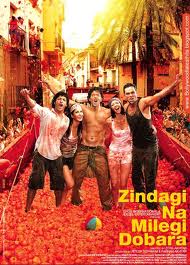
My youngest niece has been begging me to watch the Indian movie Zindagi Na Milegi Dobara (You Don't Get Life A Second Time) since its release last summer. It's a great movie, you will love it, she kept saying, but I had my doubts.
I was not looking forward to the sophomore effort from this director, Zoya Akhtar, because I had a problem with her first film, Luck By Chance. That film wanted to give the audience a bottom-up insider's peek at the ugly underbelly of the Indian film industry, by telling the story of an unknown young actor (played incidentally, by the director's twin brother, Farhan Akhtar) trying to gain success in the insular, nepotism-heavy Bollywood. Nothing wrong with that. Only that it seemed awfully hypocritical that a film with that story was being made by the brother-sister team (of lead actor and first-time director) who themselves were children of Hindi film royalty. Zoya and Farhan Akhtar are the grown kids of Javed Akhtar, arguably one of the more regarded screenplay writers / lyricists in the history of Indian cinema. It was like if Sophia Coppola made a film whose central premise was the terrible inequity of trying to become a successful female film director if you are an unknown in Hollywood. I will not deny the talents of Sophia Coppola. Or for that matter, Farhan Akhtar, an accomplished film director in his own right, who in my opinion, has made the definitive modern Hindi film of the past two decades: Dil Chahta Hai (The Heart Wants). But still, for me, Luck By Chance was undone by its queasy, morally muddled intent.
But I digress. I was not particularly inclined to rush to watch Zindagi No Milegi Dobara, but happened upon a good deal on an original DVD, and eventually got around to viewing it. The film is about three guys, best of friends when they were younger, who decide to take a trip through Spain prior to the impending wedding of one of them. Of course they have a past history, and of course there are resentments to be worked through during this road trip through some of the less touristy destinations in Spain. The three male leads are played by Hrithik Roshan, Abhay Deol and (again) Farhan Akhtar, all in real life, sons of Indian cinema giants of the previous generation - but don't get me started on that again. The film was a huge commercial and critical hit in India, and so as I watched it, I kept waiting for the film to wow me. I awaited the point when it would take off, but it remained resolutely grounded. To be certain, the film is entertaining and I watched much of it with a smile on my face. But I wanted it to amaze me, and it didn't. Write about what you know, they say, and clearly Zoya Akhtar is good at penciling in the script around the lives of privileged, highly educated, and confidently successful Indians living in the global new world, and in many areas, defining that world. I say this with nary a resentment. The director knows this world well, and damned if she is not good at anchoring her story within it. But I just did not find the film to be as smart as it thought it was. And where was that spark of genius that I have noticed in so many Indian films of the past few years. Compare Zindagi Na Milegi Dobara to the go for broke, gonzo humor of Delhi Belly from last year.Or the breathtaking, hard-boiled, Tarantino-esque wizardry of Kaminey (Scoundrels). Or the gentle sensitivity of Udaan (Flight), or Wake Up Sid. Or just the hardworking, exquisite purity of entertainment of Jab We Met (When We Met) or Three Idiots. And so I said, meh, and set aside Zindagi Na Milegi Dobara as not a particular achievement.
But to my surprise - and this is what I love about films - that movie would not leave me alone. Over the next few days, I kept thinking about the film, even when I had acknowledged to myself that it was no great shakes. And now, several months later, the film has worked itself into my conscience. And I am forced to give it second thoughts.
What is it about this film that has given it durability in my head?
For one thing it is the easy-going rhythm of the film. It does not make a big fuss every time it makes a lap around the racetrack. I appreciate the understated calm with which it paces through plot developments; this is considerable evolution by Indian cinema standards.
I like that the movie embraces the road-flick genre but does not burden it with cheap, gimmicky plot elements. While it does not possess the melancholy and austere beauty of Road Movie, the best example of the genre in Indian cinema (which incidentally also had Abhay Deol as the lead), Zindagi Na Milegi Dobara still maintains an unpredictability about it through much of its running length.
I liked the Naseeruddin Shah character in the film, which, for its limited screen time, remained beautifully flawed, and altogether real. I liked that the script did not chicken out and give him a crutch by way of an obvious motive for his behavior. That would have been the easy thing to do and the movie bravely resists that temptation.
Even more so, I liked the Katrina Kaif character in Zindagi Na Milegi Dobara. Most movies of the recent few years, from Dev D to Omkaara to Ishqiya would have you believe that they have created the quintessential female character of modern indian cinema. Those are all great films with marvelous lead female roles, but they are all heavy, deliberate, force-of-nature characters. Compare that to Katrina Kaif in this film, who at first glance may even seem like an afterthought, a perfunctory love interest for one of the three male leads. But consider how casually independent her character is. She makes a decision during the course of the film, a minor thing really, which would have been inconsequential, if not for the deftness with which the scene is written and the off-handed confidence with which the character takes ownership for her action. And for me, that all but sealed this individual as one of the most genuinely, believably modern female characters in Indian cinema in some time. It is not necessarily an overly feminist take, but one that values individual choice, even when the choice is to concede to the will of someone else.
And finally there is that end of the film. It is difficult to say much about it without spoiling it. But like most of the film, it is not overwrought or tedious. It comes quickly, with a light-handedness of touch, and carries about it the grace that The Gray did in its conclusion earlier this year. Not too many movies can speak to evoking grace in their conclusion.
So this movie was a lesson to me. That sometimes a film can grow on you by lingering within your mind even after you have shrugged it aside. And that a little piece from here, and another piece from there in a film can build up to reasonable esteem. My niece was right.
There is a particular kind of complaint that moviegoers sometimes voice: Nothing happens in this film. I have done this myself. And as I dig into my brain as to when I might have first done so, my memories coil all the way back to an utterance made in relation to a 1974 Indian film called Avishkaar ("Experiment"; in retrospect, how much more experimental could a film have been than one that announced it in its very title). Upon watching this film on television as a child of eight or nine in India, and already by then conditioned by the steady and robust ingestion of the standard Bollywood film diet, I recall telling my sister with utter incredulity: how can someone make a film where nothing happens? Of course, a lot happened in that film, but not within the specifics of the sharply angular plot turns I expected then from a cinematic experience.
These were the thoughts that came to me as I watched the Japanese film Still Walking for the first time. At first glance, nothing substantive appears to happen in this film. Over the course of a day, a family gets together in a small town away from Tokyo. A brother and sister visit their elderly parents in the home they grew up in, and they bring their own spouses and children along. They talk. They eat. They go for walks. They cook. There are resentments. There are laughs. There is remembering of the past. And by the time the next morning comes along, the families are on their way back to their original lives.
All of this transpires with a rhythm that is unrushed. And a gentleness that suffuses the entire film. To the impatient viewer this film may seem formless, purposeless, without substance.
But like the best films, this movie takes a specific experience, in this case a family reunion in contemporary Japan, and makes it resonate with universal truths. And you realize that the film has all along planned, to bring within its sight of observation, all those things in the world that we ought to care about.
To map out the members of the family in detail is to take away from the quiet pleasures of this film. Here is the grown-up daughter, now a wife and mother herself, who does not have the desire to cook the elaborate dishes that are so much a part of her mother's life. Here is the patriarch of the family, who having retired now from his physician's practice, is lost, but he still exerts the same ruthless command over his children that he probably has all his life; he is short and brusque with them and everyone walks around him on eggshells. And yet, given more consideration, it is his wife who is quietly driving the tides in this household. There is the disapproval that is inherent in parents from an older generation, sure. But there are also the grown children who feel that they can never measure up to their parents' expectations, and while oppressed by it, are too good-natured to make much of it. And inevitably there has been a death of someone young, from which the family has never recovered; years since the death, it is something that is palpably part of the present. There is disapproval of professions taken up by sons and daughters that are outside of rigidly traditional vocations. There is the new daughter-in-law trying to integrate into the larger family, and only slowly realizing the extent to which she will need to give in, in order to do so. There is the lament that the older parents spend more time remembering the dead than in considering the ones alive and present.
Does any of this strike a chord of recognition? To watch the delicate grace with which the ties within this family are revealed is to realize the accomplishment of this film. There is not a bad or selfish or thoughtless person to be found here. The script is too nuanced to allow an easy give such as that. These are people who all mean well, and are inherently good human beings. But even then, unintentional affronts occur. Something said innocently to one person unexpectedly becomes cruel within the context of the person it was never meant for. The younger generation grapples with modern ideals that are tugging and picking at traditional mores, while the older parents do not know how to behave in any way other than how they were taught. And yet, bonds are made between kids and grandparents. Grief manifests unexpectedly. Young children learn a little bit about being grown up. And the bickering between the older couple, while sometimes cruel, hides the inevitability of two lives irreversibly entwined together.
The director of Still Walking, Hirokazu Koreeda, frames the film with long shots. Of family members gathering around the dinner table in conversation. Of individuals coming and leaving the kitchen, in and out of the camera frame. Of children playing in the periphery as elders talk. Sometimes many speak at once, as in an Altman film. But Koreeda summons a larger cinematic giant in his deft, non-judgmental, minimalist take on families: Yasujiro Ozu. In fact there is much in this film that appears to bear the blueprint from Ozu's Tokyo Story. In cinema, it is easy to depict characters that are miserable or mean, but to have wondrous actors display decency and kindness of spirit takes a greater gift. Koreeda seems best poised to carry this gift forward from Ozu. To have a viewer come away from a film hungering to spend more time with its characters is a high accomplishment. To have him recognize his own life within it, is a higher laurel still.
Many years ago, Roger Ebert wrote in his review of Touchez Pas au Grisbi, "I responded to the way (the film) understood that a great movie can involve not plot, but life, and the daily living of it, and that although movies can amuse and excite us, their greatest consolation comes when they understand us". He could have been talking about Still Walking.
I have come back to Still Walking and re-watched it with gratitude, peeling layers from it, and finding truisms within almost every piece of its dialog. I can think of few better ways to spend two hours of my life.
Its Okay To Take A Day Off Once In a While (or Most Hardworking Actor, Female): Jessica Chastain (The Tree of Life, Take Shelter, The Debt, Coriolanus, The Help)
Dude, Its Okay For You To Take A Day Off Too (or Most Hardworking Actor, Male): Michael Fassbender (Jane Eyre, X-Men First Class, Shame, A Dangerous Method)
Evidence That Gone Are The Days When Getting Naked Onscreen All But Guaranteed An Oscar Nomination: Carey Mulligan (Shame), Kiera Knightley (A Dangerous Method), Kirsten Dunst (Melancholia)
Get Her Bigger Roles Already, Hollywood: Marisa Tomei, playing bit parts in Lincoln Lawyer, Ides of March, Crazy Stupid Love.
Frankly, Didn’t Think You Had It In You: Matthew McConnaghey in Lincoln Lawyer, Jennifer Aniston in Horrible Bosses
Matthew McConnaughey in The Lincoln Law
We Have Missed You On The Big Screen: Helen Hunt in Soul Surfer
"I'm an actor, and I'm here to stay, dammit": Elizabeth Olsen in Martha Marcy May Marlene
Even Good Actors Have To Pay Mortgages: Frances McDormand in Transformers 3, John Malkovich in Transformers 3, Angela Bassett in Green Lantern, Hope Davis in Real Steel
Most Consistently Miscast: Carey Mulligan in Drive and Shame (although she was admirable in both)
Most Perplexing Casting : Robin Wright’s single, nearly wordless scene in Moneyball (maybe most of her work landed on the editing room floor)
Most Criminally Overlooked: Joseph Gordon Levitt in 50/50, Viggo Mortenson in A Dangerous Method, John Krasinski in Something Borrowed, Colin Farell in Horrible Bosses.
Yoeman's Service For Improving Movies By Appearing In Them: Judy Dench in Jayne Eyre, My Week With Marilyn, and J. Edgar
Best Movie Poster: Shame
Best Final Scene : The Descendants, Melancholia
Most Perplexing Ending: Martha Marcy May Marlene, The Tree Of Life
Most Endearing Shout-out To Family: Julia Roberts mouthing "Hi, Mom!", during the end-credits for Larry Crowne
Best Way To End A Franchise: Harry Potter and the Deathly Hallows Part 2
Best Film You Haven’t Seen: A Better Life, The Big Year
Best Reason To Read Subtitles: Delhi Belly
Best Action Film: Fast Five, Mission Impossible 4: Ghost Protocol
Best Superhero Film: Captain America
Best Film Awaiting Theatrical Distribution: Your Sister's Sister (Emily Blunt, Rosemary Dewitt, Mark Duplass), The Oranges (Hugh Laurie, Catherine Keener, Allison Janney, Oliver Platt, Leighton Meester, Adam Brody)
Best Use Of 3D,Ever:Hugo
Most Underrated:Fright Night, Hanna, Warrior
It Wasn’t ThatBad (or decent movie to watch at the back of an airplane):Jumping The Broom, Something Borrowed
Brilliant Or Bogus, You Decide: The Tree Of Life, Drive
Most Disappointing: Hangover II, Water for Elephants, Red Riding Hood
Most Wasted Opportunity: In Time (which squandered away one of the best premises for a movie)
Most Unsettling Use Of CGI: The nudity digitally tacked on to the female actors in The Change-Up
For Shame, Hollywood: Transformers 3
What Was All The Fuss About?Moneyball, The Girl With The Dragon Tattoo
Shouldn’t This Be On Television Instead?My Week With Marilyn, Pina
The Movie Ticket Should Come With A Voter Registration Card (Or, most shamefully jingoistic):Battle Los Angeles, Transformers 3
The Movie Ticket Should Come With An Instruction Manual (Or, what the hell was going on?):Tinker Tailor Soldier Spy